

WHY TANGO?
Argentine tango offers profound benefits that go beyond just being a beautiful dance form. For individuals dealing with physical & mental health conditions, tango has been shown to significantly improve quality of life. Research highlights that tango can aid in the management of diseases such as Parkinson’s, depression, cancer, multiple sclerosis & heart failure by enhancing physical activity, reducing isolation & promoting emotional well-being. Medical Journal
Physical Benefits
Improved Posture & Flexibility - One of the most immediate benefits of Argentine tango is its ability to improve posture. The dance encourages dancers to maintain an upright, relaxed stance, which helps promote spinal alignment & flexibility.
Enhanced Balance & Coordination - The intricate footwork & partner dynamics of tango demand a high level of balance & coordination. As dancers move in sync with their partners, they learn to shift weight smoothly & maintain stability, which significantly reduces the risk of falls.
Cardiovascular Health - Tango is an excellent form of cardiovascular exercise that engages the whole body. The quick-paced steps & varied rhythms work to improve heart health, increase stamina & support weight management.
Muscle Strength & Endurance - Regular practice of Argentine tango helps build muscle strength, particularly in the legs, hips & core. The constant shifting of weight, controlled movements & posture maintenance engage key muscle groups that increase muscle tone & endurance.
Mental & Emotional Benefits
Stress Reduction - Dancing tango is a powerful way to manage stress. Tango requires complete focus & immersion in the moment, which provides an effective mental escape from everyday worries. The rhythmic, flowing movements have a calming effect on the nervous system, which helps lower stress hormones like cortisol.
Enhanced Cognitive Function - Tango is not only physically challenging, but it also stimulates mental processes. The improvisational nature of the dance encourages creativity, critical thinking & memory retention. Dancers must respond to their partner’s movements & adjust their own steps in real-time, which sharpens attention, reaction time & decision-making skills.
Active Meditation - Argentine tango can be considered a form of active meditation. As dancers focus on their movements, they enter a state of mindfulness that allows them to forget about external distractions. The deep connection between partners in tango requires a heightened level of presence & communication.
Social Benefits
Community & Connection - One of the most profound aspects of Argentine tango is the sense of community it creates. Tango is inherently social, with partner work & shared space being central to the dance. Dancers often form close-knit connections with fellow dancers & enjoy the sense of belonging that comes from participating in tango communities.
Increased Confidence - As dancers master the technical & emotional aspects of tango, their confidence grows. The act of leading & following in tango requires trust, communication & self-assurance. Both leaders & followers experience a boost in self-esteem as they improve their skills, develop body awareness & connect with others through the dance.
Therapeutic Applications
Recovery & Healing - Beyond its physical, mental & social benefits, Argentine tango has therapeutic applications that extend to emotional & psychological healing. Tango has been used as a therapeutic tool to help people recover from trauma, including post-traumatic stress disorder (PTSD). The act of dancing fosters trust, emotional expression & vulnerability, helping individuals rebuild emotional connections. Tango encourages participants to express feelings & connect with others in a safe & supportive environment, aiding in the emotional healing process. Studies have shown that tango therapy can be particularly effective for those recovering from emotional trauma, improving both psychological & physiological well-being. The Guardian
Beyond its artistic creation, dancing tango provides a wide array of benefits that enhance physical health, mental well-being & social connections.

Argentine Tango
Within the enigmatic embrace of Tango lies a profound narrative, a mysterious tale of nostalgia, joy & an ever present awareness of the fleeting nature of life. It's an intoxicating blend of pleasure, humour, respect & poetry, seducing hearts with its allure & leaving an indelible mark on those who dare to tread its rhythmic path.
Origins obscured in the fog of myth, Tango emerged from the vibrant cities of Buenos Aires & Montevideo in the late 19th century. Its rhythm, a confluence of African & European influences, took shape with the introduction of the "bandoneon," a musical catalyst that fueled the birth of a cultural phenomenon.
Tango's global reach began in the early 20th century when musicians & dancers travelled to Europe, igniting a sensational wave of popularity. The "Golden Era" in Buenos Aires witnessed a proliferation of tango bands, amplifying its popularity & solidifying its place as a cultural treasure.
Argentine Tango, at its core, is an improvised dance, a dance like no other. It is a puzzle, a dynamic interplay of changes in weight, walking, turning, stopping & embellishments. The dance becomes a canvas, painted differently each time, as individuals infuse their unique styles & expressions into the dance.
Tango Salon (Tango Pista)
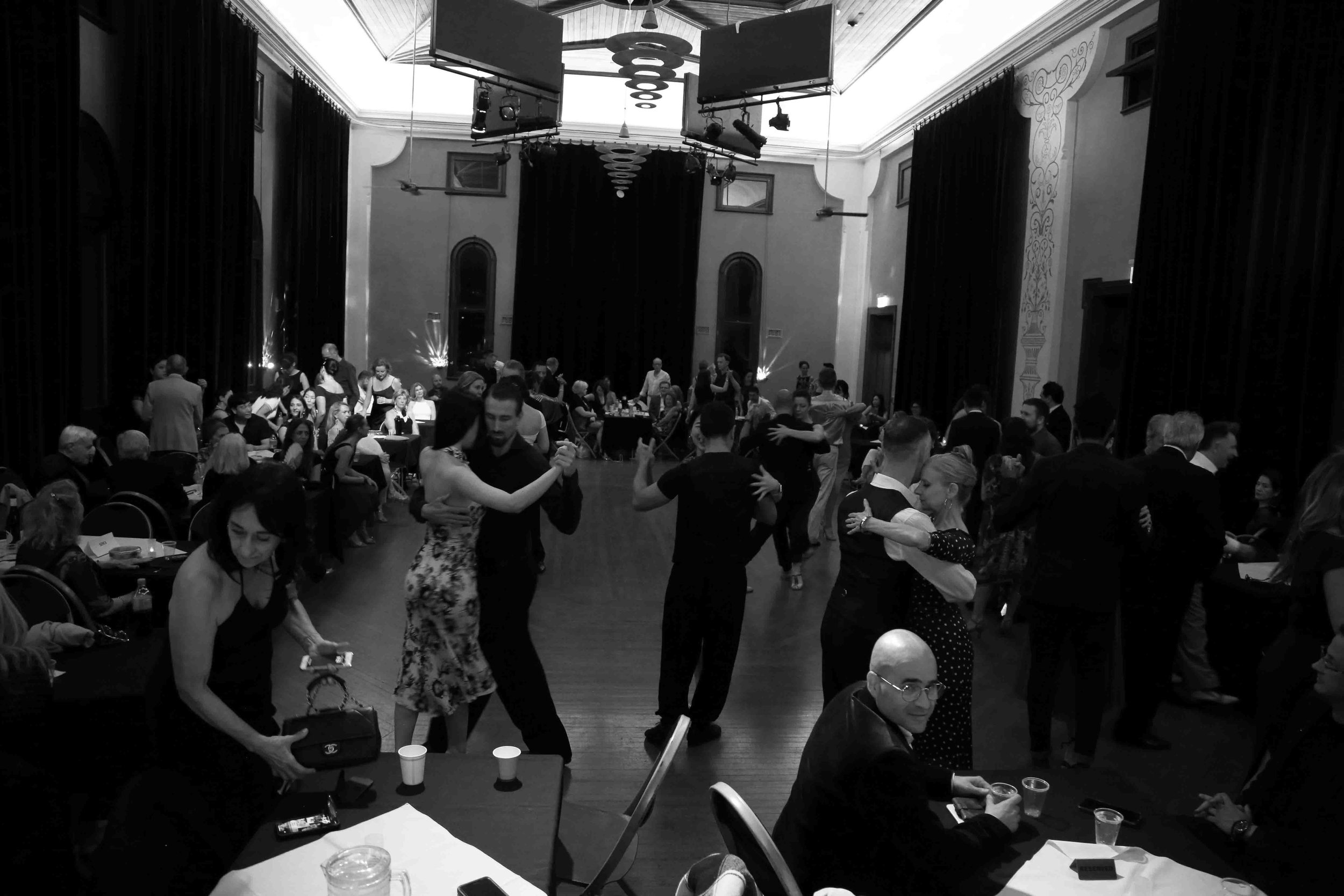
Tango Pista, often referred to as Salon Tango, is primarily danced in social settings like ballrooms, tango clubs & milongas. It thrives in environments where improvisation & connection take precedence. Tango Pista is distinguished by a close embrace between dance partners. This close connection fosters communication & allows for subtle lead-&-follow dynamics. Movements in Tango Pista are typically compact & well-suited for navigating crowded dance floors. Steps are deliberate, emphasising precision & elegance.
Dancers in Tango Pista focus on interpreting the music. The dance often includes pauses, syncopated steps & an intricate interplay between the dancers & the rhythm of the music. One of the key features of Tango Pista is its improvisational nature. Unlike choreographed performances, dancers improvise their steps, responding to the music & each other in real-time.
Tango Pista is a social dance where dancers gather at a milonga to enjoy & participate in the dance. These social events are organised into tanda’s. In tango, a "tanda" refers to a set of typically three to four songs played in a sequence, intended to be danced with the same partner. This structure is designed to maintain a consistent mood & rhythm, as the songs within a tanda are usually by the same orchestra or have a similar style. Between tandas, a "cortina" (meaning "curtain" in Spanish) is played. This short piece of non-tango music, lasting about 30-60 seconds, signals the end of one tanda & provides dancers with a brief break to change partners or rest. The "cabeceo," a nod of the head, is a traditional way to invite someone to dance, allowing both parties to agree without verbal communication.
Tanda’s are grouped to create a specific musical & emotional journey. They might feature different tango styles, such as traditional tango, milonga or vals & can vary from slow & romantic to fast & playful. This grouping enhances the social dance experience, promoting a smoother flow of partners & a richer musical journey at milongas (social tango dance events).

Stage Tango (Tango Escenario)
Stage Tango is a choreographed & theatrical form of Argentine Tango specifically designed for performances on stages or in theatrical settings. It departs from the improvisational nature of social tango, focusing on creating a visually stunning & emotionally charged spectacle for the audience. Stage Tango involves meticulously planned & rehearsed choreography. Dancers work together to create a performance that tells a story, conveys emotions or explores a theme.
Unlike the compact movements of Tango Pista, Stage Tango incorporates more expansive & dynamic movements. Dancers may execute lifts, spins & dramatic poses to impress the audience. The style emphasises visual flair & dancers may use elaborate costumes to enhance the theatricality of the performance. Costumes are often designed to complement the theme or story being portrayed.
While traditional tango embraces are typically close, Stage Tango allows for variations in embrace to suit the choreography. This flexibility enhances the visual impact of the performance. Stage Tango often involves storytelling or thematic exploration. Dancers convey narratives through their movements, expressions & interactions, creating a more theatrical & emotionally charged experience. The goal is to evoke strong reactions from the audience & convey a deeper connection beyond the technical aspects of the dance.
In Stage Tango, the roles of the lead & follower are even more crucial, as they must work in perfect harmony to expand the steps & deliver a dynamic, visually captivating performance. The lead must guide with clarity & precision, ensuring the follower can respond swiftly & confidently, enabling complex movements & intricate choreography to flow seamlessly. Stage Tango may incorporate theatrical elements such as lighting, set design, & music choices to enhance the overall impact of the performance. Precision is paramount in Stage Tango. Dancers must execute choreography with impeccable timing & coordination to deliver a polished & professional performance.

Tango Waltz (Vals)
Tango Waltz is danced to music, characterised by a 3/4 time signature. The rhythm is distinctly different from the traditional 4/4 or 2/4 time signature associated with many tango styles. Tango Waltz blends the essence of tango with the flowing & elegant movements associated with the waltz. Dancers seamlessly incorporate tango elements into the waltz structure. The embrace in Tango Waltz can vary, but it often includes both open & close embraces. The choice of embrace depends on the style & interpretation of the dance. Dancers in Tango Waltz aim for flowing & graceful movements.
One of the defining characteristics of Tango Waltz is its roundness, which refers to the graceful, circular motion that the dance embodies. This roundness is achieved through the seamless flow of the dancers’ movements, creating an elegant arc that captures the essence of both tango & waltz. The circular nature of the dance is most evident in the sweeping turns & fluid transitions, where the dancers glide through space, maintaining a smooth, consistent rhythm. The roundness in Tango Waltz is not just about the physical shape of the movements but also about the emotional connection between the lead & the follower. As they move together in this circular pattern, they create a sense of unity & harmony. The movements are continuous, with each step flowing naturally into the next, allowing the dancers to navigate the floor in a way that feels effortless & organic.
Milonga Dance:
Milonga refers to both a dance style & a social event where this dance form is celebrated. It is typically danced in social gatherings dedicated to faster-paced tango-related music. Milonga music is a faster tempo compared to traditional tango. The dance reflects this quicker pace, creating a lively & energetic atmosphere. Milonga involves quick & playful footwork. Dancers execute rapid steps, syncopated patterns & playful embellishments, contributing to the dynamic nature of the dance.
While maintaining the essence of connection found in other tango styles, Milonga often features a lighter & more playful connection between dance partners. The emphasis is on spontaneity & enjoyment. Milonga embraces a lively & rhythmic quality. Dancers respond to the playful beats & variations in the music, creating a dance that is both exciting & unpredictable.
Two key styles within milonga add depth to its expression: Milonga Lisa & Traspie.
Milonga Lisa is a smoother, more flowing version of the dance, with movements that tend to be more continuous & less sharp. It emphasises a fluid connection between the dancers & allows for a more relaxed interpretation of the music. In this style, dancers often glide across the floor, maintaining a smooth flow despite the fast pace of the music.
Traspie brings a burst of rhythm into the mix. The term “traspie” refers to a syncopated step that creates a staccato effect within the dance. Dancers incorporate sharp, quick movements & unexpected pauses, adding an element of surprise & excitement. This style requires precision & timing, & it plays off the rhythm of the music, providing a sense of contrast with the smoother movements of milonga lisa. The result is a playful, rhythmic texture that adds further layers to the dance.
